Opinion: Historicizing Prohibition

Prohibition came out of nowhere - at least in the high school curriculum. In the lull between the Spanish-American War and the Great Depression was an offbeat sideplot about the time the United States banned the recreational consumption of alcohol. It didn’t help that the timeline for Prohibition coincides closely with the First World War, and there wasn’t enough time in the curriculum to cover the long and nuanced windup to the 18th Amendment and Volstead Act. The “what” seems so absurd that any sort of “why” beyond demonization of the lawmakers involved seems like justification.
This is no justification for Prohibition, but how we frame it needs to be redefined. Ken Burns’ overall wonderful documentary on the subject, Prohibition, opens with writer Daniel Okrent seemingly incredulous that “a freedom-loving people, a nation that’s built on individual rights and liberties, decide in one, kind of crazed moment it seems, that we can tell people how to live their lives.” This summarizes the prevalent narrative which perpetuates the myth that Prohibition was a case of temporary insanity and not an expression of what was inside the national character all along. It was not a flash fire, but a deliberately built bonfire.
Gathering the Logs
Alcoholic drink was a part of everyday American life since the start. In New England, it was common for workingmen to enjoy a flagon of cider after a hard days work, and nobody batted an eye. Alcoholic punch was standard practice in White House parties. Drunkenness was frowned upon, but it was seen as unrelated to the casual consumption - a crucial component of this attitude was that this cider was estimated to be ~2.5% ABV (Alcohol by Volume). For comparison, a modern Bud Light has 4.2% ABV.
Everything changed when whiskey hit the market. By the early 19th century the farmlands of Kentucky, Tennessee, and the rest of the massive territory of Louisiana provided a surplus of grains that were distilled into whiskey. Using the Mississippi river for distribution, it first took the Southern US by storm before flooding into the rest of the country. Whiskey became a part of drinking life, replacing the cider of yesteryear; Americans started getting very drunk, very fast.
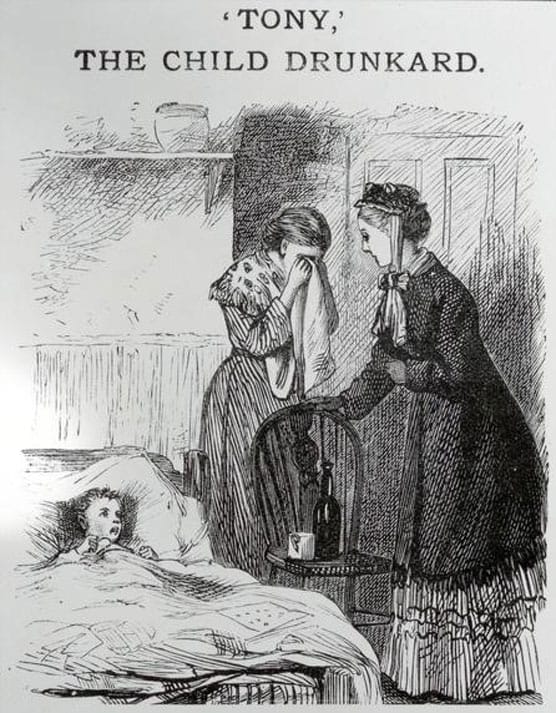
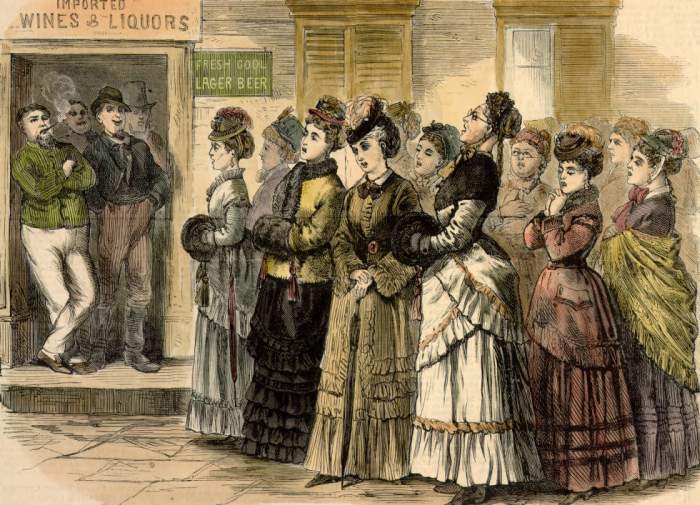
Women were the primary victims of this inebriated status quo, and became the first advocates against it. Women almost entirely relied on their husbands for material security in those days, so when the breadwinner spent his whole paycheck at the saloon and came home in an irascible state, there was very little they could do to protect themselves and their children. Organizing into “temperance leagues” they advocated initially for abstinence from hard liquors but quickly expanded to total abstinence from all alcohol. In some states, the temperance leagues successfully lobbied to prohibit the sale of alcohol with support from local clergy. In less successful areas, they nonetheless demonstrated their presence politically by organizing pickets and protesting at saloons. It would be over 80 years before these women would have the option to let their voices be heard any other way.
After the initial push of the temperance leagues, the country’s activists shifted focus. The 1840s had a bigger fish to fry - abolition of slavery. The temperance movement had considerable intersectionality with abolition, and that did not work in its favor when the slavery debate consumed national politics. Thus, the crusade against alcohol remained merely an undercurrent for the next 40 years.
Preparing the Kindling
When the country regained a thirst for temperance in the late 19th century, the landscape had shifted considerably - most starkly in the large influx of German, Irish, and Italian immigrants. These immigrants spoke, worshiped, and drank differently than the “native” Americans were used to. They congregated in saloons; bars in cities like New York and Chicago served as a home base for many of these communities. It was a welcoming environment for new arrivals, giving them a place to find employment, cash their paycheck, and even receive mail before they could get settled at a permanent address. While a vital resource for those it served, saloons were often a dismal and dangerous place for women and "respectable" members of society and many chose to stay far away.
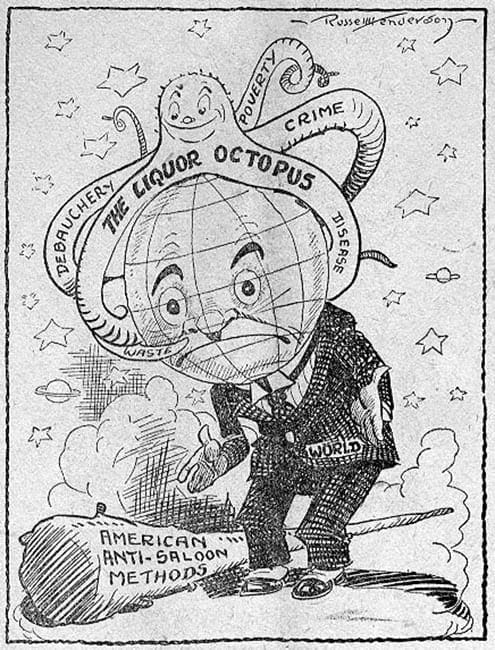
The influx of these European immigrants alarmed the native Americans who had enjoyed cultural hegemony but now found themselves outnumbered in the rapidly growing cities. The Republican Party at this time represented rural nativism, and the Democratic Party responded as the party of the urban immigrant (and Southern racist but this group sided with Republicans on Prohibition). In this way, Prohibition represented a vector to express moral superiority over the urban immigrant population. This unique coalescence of interest groups created the perfect environment to grow the undercurrent of temperance into a force for Prohibition, now branded as the Anti-Saloon League.
Even the wealthy industrialists weighed in on the issue. Robber barons such as John D. Rockefeller threw their weight in with the Anti-Saloon League, arguing that a sober worker was a more efficient one. On the other side were the brewers. Adolphus Busch, of Budweiser fame, was a prominent opponent of prohibition not only for the obvious business reasons but also in solidarity with his fellow Germans. This war of native vs immigrant, rural vs urban, and Protestant vs Catholic fit cleanly into the evergreen struggle between Democrat and Republican. Until the early 20th century they were at a stalemate with the Anti-Saloon League unable to advance their agenda on the national level.
Note: Republican politicians were not always Dry, and Democratic politicians were not always Wet. There were factions of each in both parties, but as the rural Protestants were already enmeshed in the Republican machine the party became predominantly Dry, and vice versa for the Democrats.
Igniting the Tinder
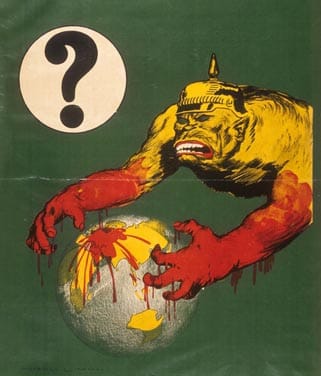
The United States’ entry into the First World War broke the deadlock. With the 1917 declaration of war against the Central Powers, the Wilson administration churned out propaganda that turned the public against Germany and Germans. With the rise of domestic hostility towards the brewers alongside all Germans, the Anti-Saloon League seized the moment. First achieving a reasonable-sounding wartime measure prohibiting precious grain from being sold to brewers, they rode the Dry momentum by proposing an amendment to the Constitution that banned the consumption of alcohol. This passed solely because they agreed to set a deadline for state ratification of 7 years, a considerably short period of time that the opponents of the amendment were confident would lapse. The Anti-Prohibitionists realized their blunder when the 18th Amendment was ratified by 36 states in less than 13 months.
Amending the Narrative
The way Prohibition is discussed in the popular culture, it's a compelling piece of myth: in the throes of temporary insanity, fanatics used the government to violate the freedom of their countrymen and were quickly shown the folly of their actions due to failures in enforcement. After its nullification via the 21st Amendment in 1933, Americans never again tried to legislate the morality of others. Prohibition was a one-off, ill-conceived experiment that we all learned from.
While this is a feel-good narrative, it is not true.
Historically, the American people love nothing more than weaponizing the government against their fellow citizen. Singling out Prohibition as an example of "telling people how to live their lives" is laughable when we live in a country still reeling from the effects of Jim Crow, bans on same-sex marriage, and restrictions on women’s civil rights - just to name the examples that happened within my grandparents’ time. After Prohibition’s 13-year reign, its most notable lasting effects amounted to Blue Laws (regional laws stipulating days and times when liquor can be sold) and minimum drinking ages. These laws serve only as mere inconveniences - ask any college kid.
There is a direct analogue to Prohibition that we still live under: the Controlled Substance Act of 1970, colloquially known as the War on Drugs. Introduced in 1970 and signed into law by Richard Nixon, the War on Drugs has outlasted ten presidents - with at least three of whom indicating they would correct it in some form. In the exact same way Prohibition enabled gangs of criminal bootleggers to thrive, the War on Drugs fueled Mexican and South American cartels. It is commonplace to hear of overdoses from drugs laced with fentanyl, as there is no quality control for illegal substances. Marijuana remains federally illegal despite being by most metrics far less harmful than alcohol ever was. Although the practice has been curbed considerably in the past decade, the incarceration of racial minorities for possession of minuscule amounts of the drug tore whole communities apart. The 56-year (and counting) history of the War on Drugs and its innumerable knock-on effects are too complex to cover here, but suffice it to say its consequences domestically and abroad dwarf Prohibition.
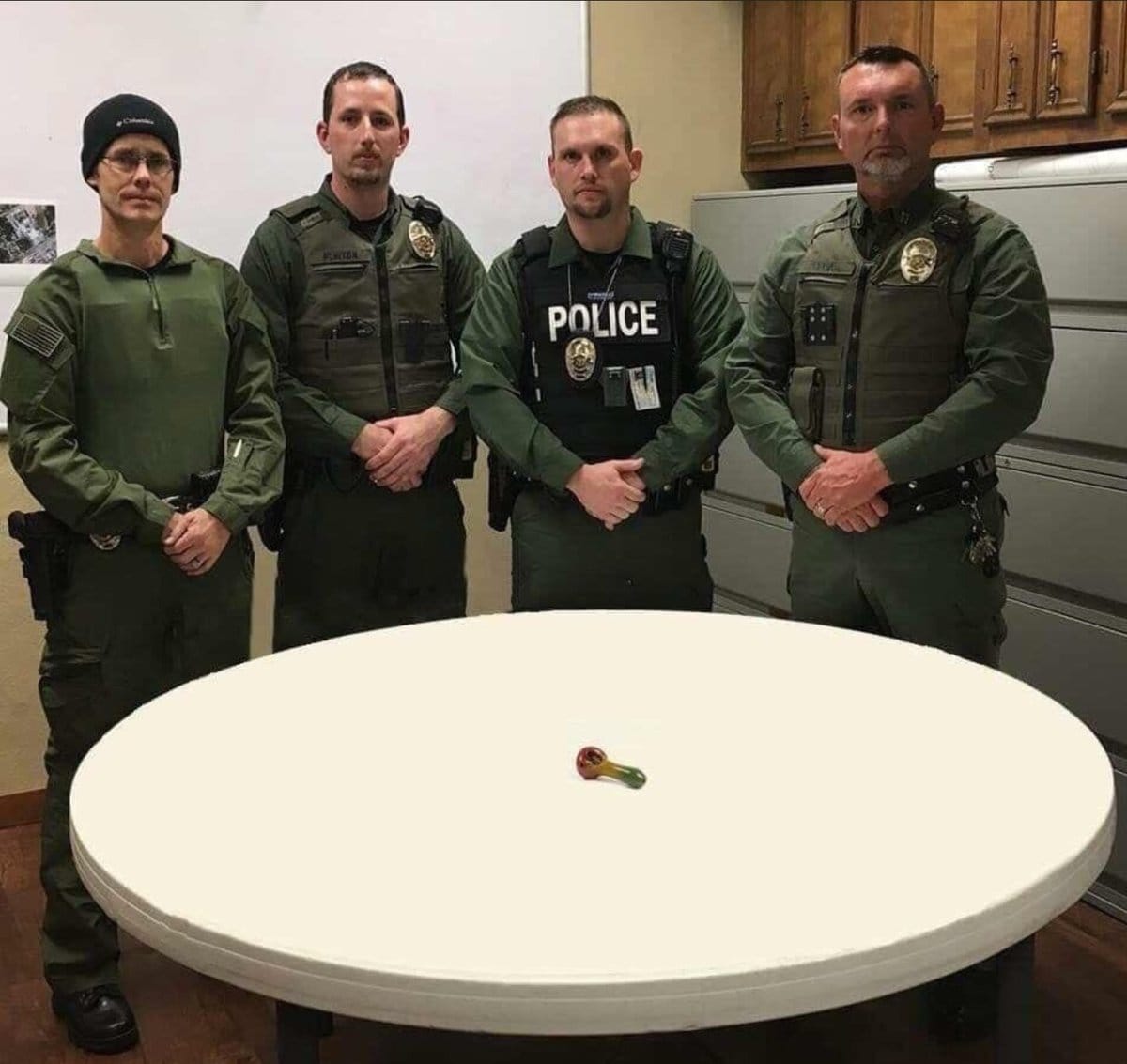
Prohibition was a lesson, but one that remains unlearned. It was unfortunately not fueled by collective insanity, but was the natural result of interest groups combining with enough force to put their agenda into law. If that qualifies as insanity, then maybe the United States is clinical.
Thank you for reading this opinion piece! My next article will not feature Woodrow Wilson or Richard Nixon, I swear.
No AI was used at any point in the creation of this article.