Outro: Why I Don't Rank Presidents

I will occasionally get asked who my favorite president is, and I always answer the same: James Monroe is my favorite pre-Civil War president because he had a clear forward vision for the country’s place in the world, and Rutherford B. Hayes is my favorite post-Civil War president due to his fight against the corrupt interests that elected him. These are not, however, who I believe the BEST presidents were. Assembling a definitive ranking of presidents is a much more difficult task to complete - and I have zero interest in doing it. Here are the two biggest reasons why.
Reason 1: The presidency was a totally different job depending on the era.
In Washington’s day, the president was simply tasked with being the single representative of the country in foreign affairs and keeping Congress in check with the veto stamp in case of total disarray. This limited job description did not last long, as Jefferson encroached on congressional courtesy to push the Louisiana Purchase through (not that Congress was complaining). Jackson further pushed the boundaries of traditional presidential duties by openly feuding with the Supreme Court. Until the Civil War, the presidency was characterized by deference to Congress, as a president's ability was gauged by how he was able to shepherd his agenda through the chambers. In the rare occasion a veto was deployed, it was almost always accompanied by a message referencing the Constitution or moral obligation.
The Civil War changed the character of the country in innumerable ways, and one of those was a dramatic expansion of presidential power followed by a dramatic contraction. Lincoln played fast and loose with what was constitutional, instituting laws that restricted what could be printed and cracking down on hostile publications. It is also not often appreciated how radical the Emancipation Proclamation was in terms of presidential power. After his assassination, however, his successor Andrew Johnson found himself at odds with Congress. A Democratic president staring down the barrel of a super-majority Republican congress was never going to accomplish much, but Johnson actively fought to frustrate Congress’s agenda to heal the country after the war. When Johnson set his crosshairs on Edwin Stanton, the Lincoln-appointed Secretary of War, Congress passed the Tenure of Office Act which required the Senate to approve any dismissals from the president’s cabinet. This, in effect, denied Johnson power over his own Executive Branch. By the closing months of his term, the President had cut all normal communication with Congress. This has never again happened.
Congress largely ran the show for the rest of the century, with the president primarily serving to echo their party’s platform domestically. While the corporate cronyism and party spoilsmanship during this time is well documented, it is important to note that presidents Grant, Hayes, Arthur, and Cleveland actively tried to fight against this corruption with various degrees of success when they had the congressional cache to do so.
It is with Franklin Roosevelt in the 1930s that we first see the presidential job description resemble a 21st century leader. Roosevelt had the benefit of both chambers of Congress on his side and a political opposition in disarray from the Great Depression. Throughout his unprecedentedly lengthy tenure as President he embodied every possible aspect of the presidency we expect: Legislator as he pushed through the New Deal, Diplomat as he navigated through the most destructive war the world has ever seen, and Commander in Chief as he led the country victorious through that war. Although a controversial figure, especially among opponents of big government, FDR expanded the presidency into what we see today.
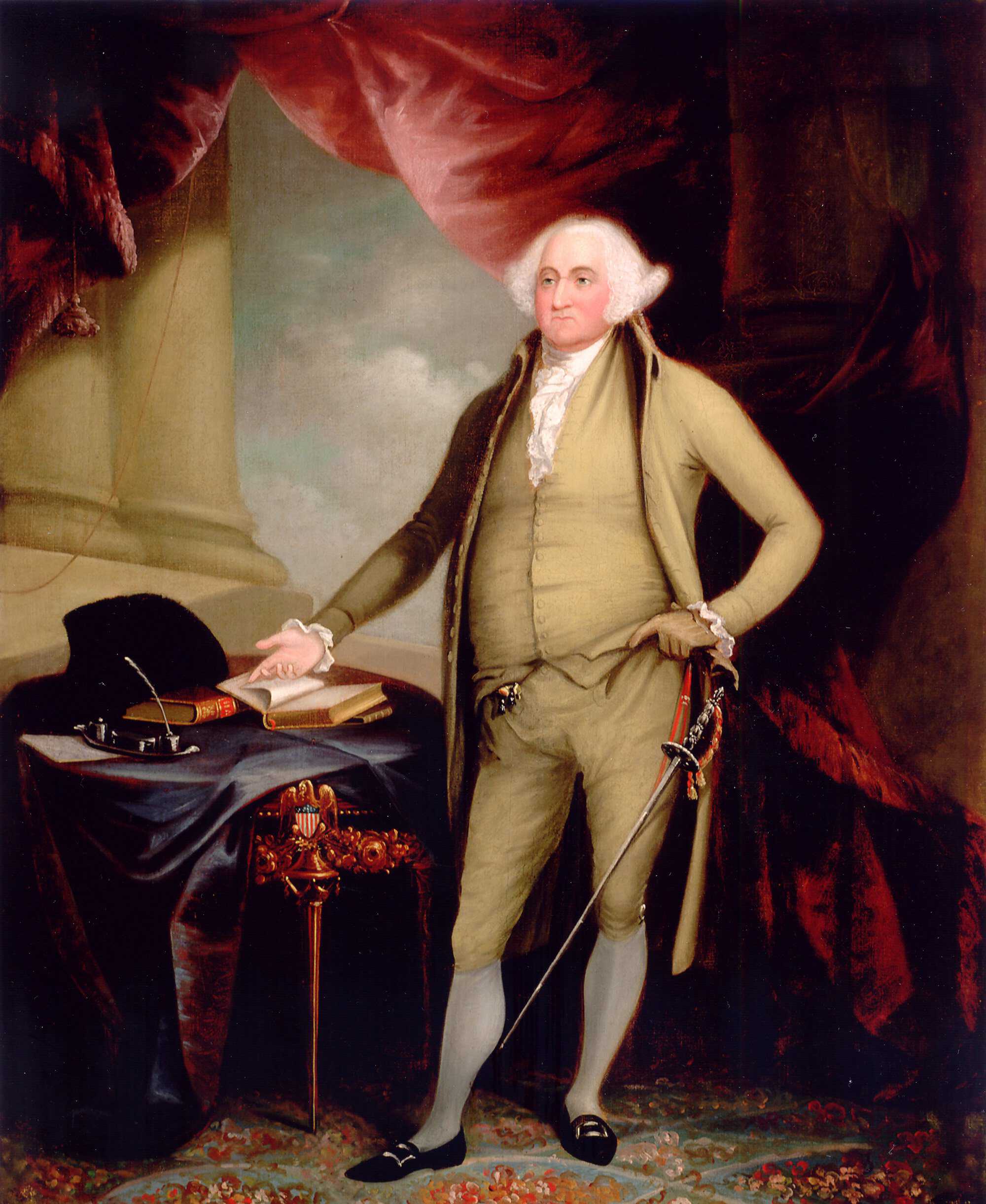
With all this in mind, how can you meaningfully compare a post-FDR presidency to a John Adams?
Reason 2: The arithmetic gets very gross, very quickly
Ranking necessitates quantification. You compile a list of all the notable things a president has done, assign each a value, and total them all up. This seems straightforward, if a little tedious, but to do this you must ask yourself fun questions such as “does protecting the rights of Black Americans outweigh the genocide of the Native Americans?” This is not just theoretical either: as president, Ulysses S. Grant oversaw the military reconstruction of the South and ushered in a brief era of unprecedented security for newly freed Blacks; at the same time he appointed Gen. Philip Sheridan (infamous for his “forced deprivation” tactics) to take the lead on fighting the Plains Indians. Each of these actions had separate knock-on effects that cannot be reduced to a utilitarian integer.
Quantification also encourages “heroes and villains” narratives when studying history. This is something I had to un-learn very quickly when reading about early presidents; we love to root for George Washington in the chapters about his wise and measured leadership, then turn on him in the chapters about the plantations of people he enslaved. The fact of the matter is that these disparate elements coexisted in the lives of these men - strikingly intelligent decisions mixed with bafflingly inhumane lifestyles. Every president, like all people, is both a hero and a villain depending on the chapter.
What's next?
This is a tricky question. The Presidential Biography Series is the conclusion of three years of studying, and I haven’t been reading anything remotely as content-rich as that in this time. I certainly don’t want to spend another three years on a new subject before I start writing about it, so I expect that I’ll be opting for more experience-based articles like museum visits. I can almost guarantee, however, that my content will continue to lean towards history and art.
I cannot express enough how grateful I am to all the friends and family who have taken the time to read the articles I have published so far. I thoroughly enjoyed writing this series, and I hope you are as excited as I am to see what is coming next.
Sincerely, J.R. Bergman
No AI was used at any point in the creation of this blog