Miscast: Woodrow Wilson

One of the more controversial presidents among classical and modern historians, Woodrow Wilson’s administration from 1913-1921 was a cacophony of moving parts. At home, labor was becoming restless and the demographic shifts of the Great Migration flared racial tensions in city centers. Next door, Mexico was in the hands of another military dictatorship on the verge of being toppled by the previous regime. Abroad, central Europe began mobilizing for war. Some presidents were lucky with the times they were elected - Woodrow Wilson was not. Classical historians will argue his merits, pointing to his establishing the Federal Reserve and careful diplomacy with Germany; modern historians will argue his faults, referring to his segregation of the federal government and Palmer raids targeting Russian immigrants.
Settling once and for all if Wilson was a good president is above my pay grade. I’m sidestepping that debate entirely to argue that Woodrow Wilson would have been better as Secretary of State.
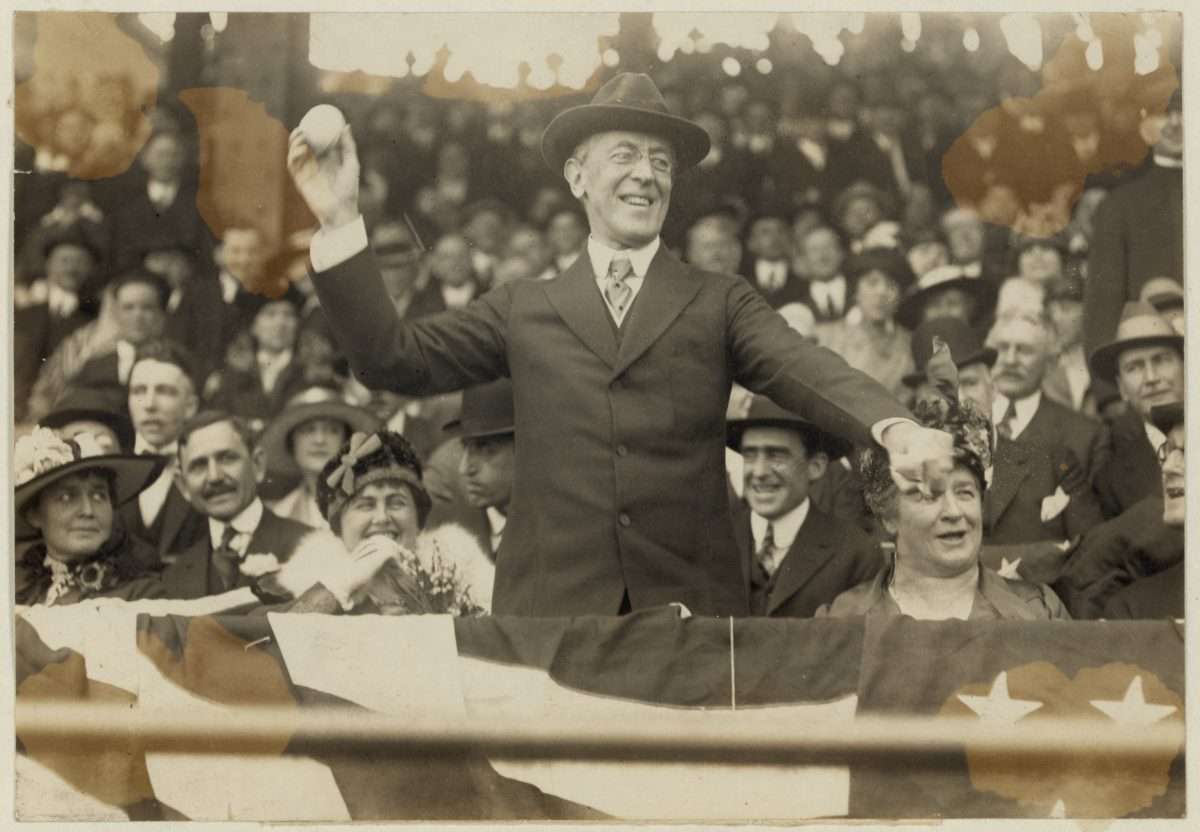
Wilson as President
Being President of the United States is a multifaceted job. In the late 19th century, presidents were expected to be the face of their political party domestically, and the face of the country abroad. With the changes of the 20th century, however, the role of the president was becoming more pronounced. Particularly after Theodore Roosevelt (serving 1901-1909) added “public speaker” to the job description, being an effective communicator when addressing the public became mandatory. Press conferences, a new feature of the Wilson administration, were ironically a weakness. Stipulating that the pressmen were prohibited from directly quoting him, Wilson often meandered in vague responses to the confusion of those present. While remarkably apt in gauging public feeling on the issues of the day, he was never able to endear himself to the public like T.R. had.
A key responsibility of being a 20th century president is wrangling your party. Kept out of the White House since 1897, The Democratic Party in 1913 was a quirky coalition of anti-Republican forces: Northeastern intelligentsia, Catholics, urban bosses, and southern racists. Banding together to defeat the Republican establishment of corrupt industrialists and bankers, the dog had finally caught the car. This was all well and good, but now Wilson had to organize these groups into an actual political force to pass legislation. One of the more regrettable aspects of this beginning period was Wilson’s inaction while his Democratic lackeys finalized the racial segregation of federal departments. While not one of his directives, he evidently did not put any significant effort to stop it. [One note that is often lost is that BOTH parties at this time were jettisoning the Black electorate - segregation had already begun under the previous Republican administrations] Far more interested in tariff reform and other big-picture issues, he simply ignored what he deemed too small.
The entrance of the United States into WWI in 1917 came with a host of questionable decisions from the Executive. One of the more contentious wartime decisions Wilson made was nationalizing the railroads, preventing any unrest by simply up-ending the labor/owner relationship. This would backfire later as the unrest was merely postponed. Another, more famous misstep was the Espionage Act which criminalized criticism of the war effort (as well as the government). This disproportionately punished German immigrant groups and, interestingly, Irish nationalist groups who saw the war as a product of British imperialism. The weapons of choice for enforcement of the Espionage Act were called Palmer Raids, named after the Attorney General A. Mitchell Palmer, where agents of the Department of Justice would raid meetings and gatherings of suspected labor agitators, communists, and anarchists. In many ways this was a precursor to the Red Scare of the 1950s.
Wilson’s unprecedented decision to leave the country for several months to participate in the peace negotiations at the close of WWI was a fateful one, as upon his return in 1919 he found the country in dire straits. Troubled by the thousands of dissidents occupying the nation’s prisons as result of the Espionage Act, he intended to embody the liberal spirit and pardon them - unfortunately the country was not in the mood for amnesty. Race riots had broken out in several cities as anti-immigrant sentiment stoked by the government and the crowds of African-Americans fleeing the Jim Crow south reached an apex. The military was eventually brought in to restore order. A railway strike, driven by disaffected workers suffering from low wartime wages but still subjected to increasing food costs, was narrowly avoided by a “please give us more time” letter from the government. Until his departure from the Oval Office in 1921, the order of the day seemed to be racism, racketeering, and rage.
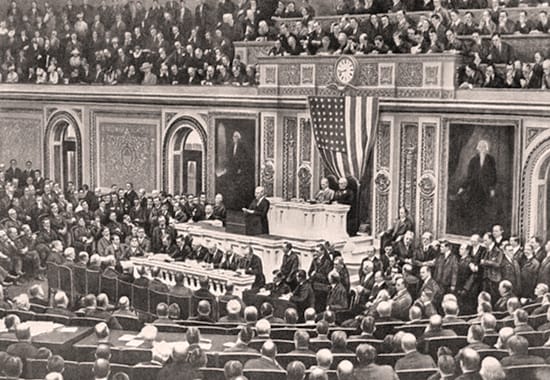
Wilson as Secretary of State
Wilson’s preoccupation with all things foreign pegs him as the perfect Secretary of State. Freeing him from pesky minutiae of domestic politics and allowing him to focus on the lofty ambitions of enduring peace in Europe sets him right in his comfort zone.
As Germany’s invasion of Belgium and Great Britain’s blockade of the Central Powers began, Wilson remained committed to involving the US only economically and equally. Remaining neutral was not easy, however, as Germany’s U-boats routinely sunk American goods - and occasionally citizens. The U-boat, a new technology comparable to a submarine, was uncharted waters legally as it could sink a ship far faster than any cruiser but possessed practically no defensive capability aside from stealth. U-boat captains had to make quick decisions when deciding whether to attack, as allowing the target (whether they knew they were considered Germany’s enemy or not) to strike first was certain death. Between 1914 and 1917 Wilson and Germany went back and forth with Wilson scolding Germany and Germany pleading “Whoopsie Daisies we’ll chill”. Finally, Germany finally said they would continue the U-boating indefinitely, forcing Wilson to ask Congress for a declaration of war. Theodore Roosevelt, American’s favorite boy, had been clamoring for war for years.
Quick note: Dealing with the Allies was not easy either, as prior to Wilson’s 1917 declaration of war Great Britain had been imposing their blockade on American goods, but there was never a real possibility of the US joining the war on the side of the Central Powers.
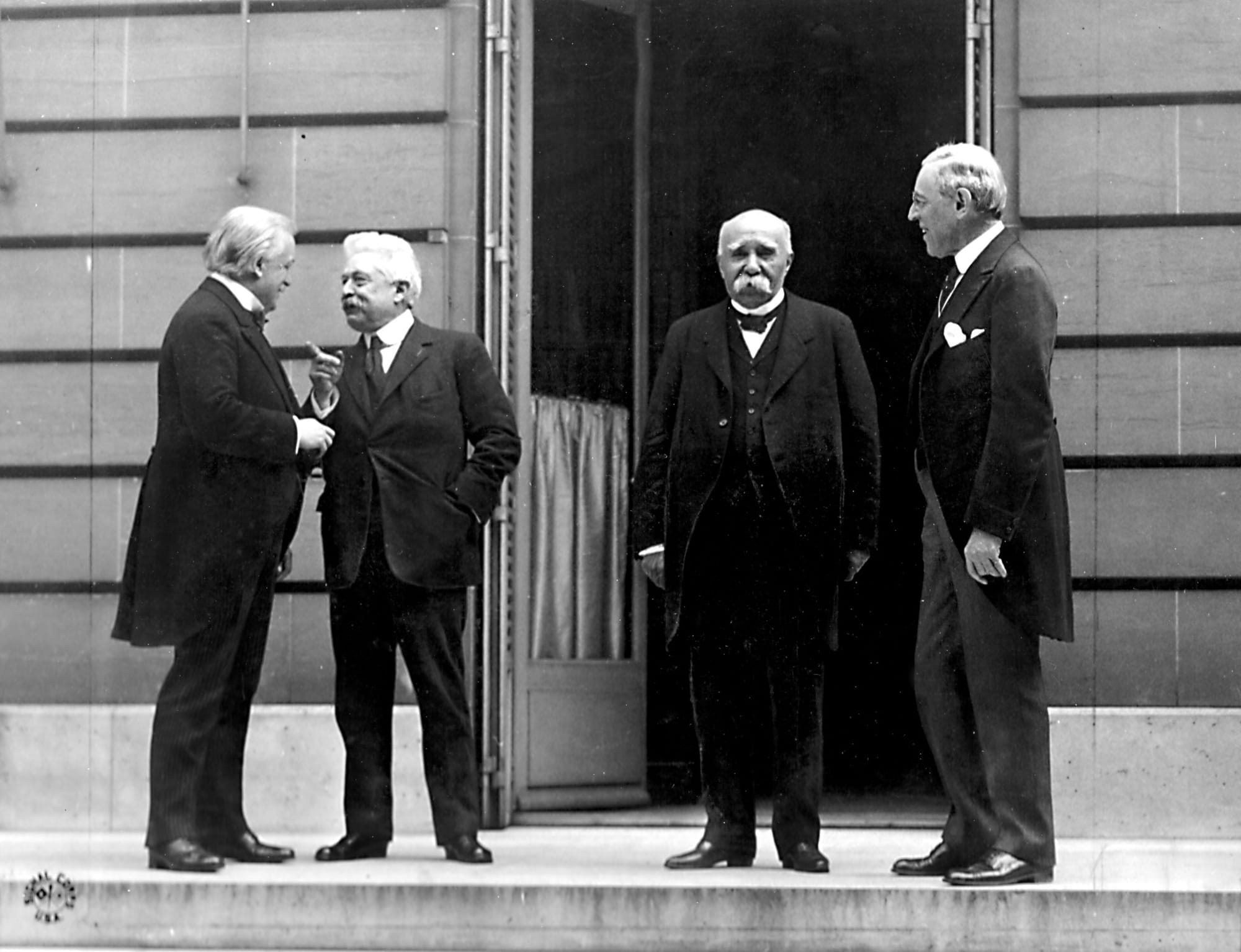
Sitting at the peace table after the armistice in 1918, Wilson had goals far more lofty than those of his negotiating partners. Prime Minister Clemenceau of France had one thing on his mind: safeguarding his eastern border from future German aggression. Above all, Germany must be punished and punished hard - anything less would be a disgrace to the million men and boys sacrificed for victory. Prime Minister Lloyd George of Great Britain hoped to end the war with more territory and riches than when it began, arguing that the blood and treasure spent by both England and the worldwide Commonwealth entitled the colonial empire to Germany’s overseas holdings.
Wilson came to the table with the controversial plan to make sure another world war never happened again. Known as the Fourteen Points, it advocated for (oversimplified) a return to pre-war borders with a few exceptions, decreased militarization for everybody, open diplomacy and trade, creation of Turkish and Polish states, and creation of a League of Nations. He vehemently held the line as Clemenceau fought for a total demilitarizing of Germany and Lloyd George fought for a new British-led world order. Wilson’s was, in many ways, the only perspective in the room different from the one that has caused the war in the first place.
Wrapping this up
Woodrow Wilson was a complicated guy with a complicated job in a complicated time. He had lofty goals in terms of America’s place in the world, but in his fixation on the forest he never had a mind for the trees. It’s frustrating to read about his plans for reform on the domestic level that he never was able to implement due to the overwhelming shadow of World War 1, but that was the job. If he was able to solely focus on foreign matters as Secretary of State and had a President back home to keep house, I believe the country would have benefited.
Things I need to mention to avoid spreading misinformation by omission:
- As President, Wilson did establish the Federal Reserve which I consider a very good move. However, creation of an independent treasury was part of the Democratic Party’s platform in 1912 so I am assuming that the hypothetical President appointing Wilson would do the same.
- Wilson suffered a series of strokes during and after the WW1 peace negotiations which severely diminished his impact in the final years of his term. An argument could be made that if he was Secretary of State it wouldn’t have been as impactful to the country, but it feels a little gross making that argument when there’s more convincing points.
- Wilson’s daughter Margaret looks exactly like him. Seriously, look it up!
Thank you for reading!
No AI was used at any point in the creation of this blog