Opinion: Historicizing Watergate

Mentioning the Watergate Scandal of 1972 conjures up a different picture depending on your age. For those who lived through it, they remember sitting in front of their television sets as their implicit trust in the office of the president was eroded night after night with the release of new findings. For the younger generations, they (we) remember learning about it in history class - a complex and horrific scandal that took up more class time than the entirety of Reconstruction.
For those who were staring out the window during history class (summer was quickly approaching when the 1970s rolled around), here is a very quick overview of what the Watergate Scandal was. President Richard Nixon’s 1972 re-election committee sent burglars to plant listening devices in the Democratic National Committee (DNC) headquarters. They succeeded, but later on the listening devices needed repairs, so a second burglary was carried out. Unfortunately, the bumbling burglars bungled the job and the team of five were discovered, arrested, and tried. Nixon was not aware of these burglaries, but that didn’t stop him from launching his administration into a complex coverup. The details of this cover-up operation aren’t important, but it’s worth noting that several high-profile news sources such as The Washington Post and The New York Times leveraged anonymous sources to keep the scandal in the news. Nixon’s paranoia was apparent as he ordered the removal of the Attorney General investigating him; it took two resignations before he could find somebody to actually do it. The investigation continued, however, and culminated in the revelation of a recording of Nixon in the Oval Office essentially admitting to the coverup. At this point, a vote in Congress to impeach passed, and in response Nixon resigned. President Ford pardoned Nixon soon after.
Watergate should be remembered as a cultural moment in the collective memory of Americans when everybody saw that the president was a crook (his words, not mine) and lost his office because of it. It should not, however, be remembered as the nadir of presidential conduct, especially knowing what we know now about that time.
But why do we still talk about Watergate this way?
Reason 1: Visibility
One of the primary reasons Watergate has stayed in the American consciousness is that it was public. When high-profile officials are dismissed simply for refusing orders from the president, it makes headlines. On top of that, informants from inside the administration regularly leaked info to the press. Little did the public know that Nixon had already done far worse.
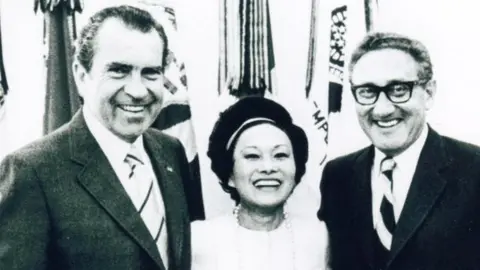
During the 1968 campaign, peace talks between North Vietnam and South Vietnam were scheduled in Paris. The Johnson administration potentially had an opportunity to take a significant step toward peace; this was alarming to the Nixon campaign, because unlike its leaders Americans generally like peace. So, in order to prevent any real progress at Paris, Nixon’s campaign contacted (through a Chinese-American liaison) the leader of South Vietnam to give them a clear message: “Hang on through [the] election.” Nixon got his wish, and no significant progress was made in Paris until 1972. An important point to note is that this did not become definitively known until a telephone conversation emerged in recent years where Nixon clearly instructs his future chief of staff to continue “working on” the peace talk situation. It should not need to be stated that this is a more severe infraction than spying on the opposition. The lack of public knowledge of this interference, named the “Chennault Affair” after the liaison’s surname, is why this is not remembered but Watergate is.
Note: At the time, President Lyndon Johnson was tipped off that these dealings were happening; the issue was he only knew this due to his own illegal wiretapping of the South Vietnamese embassies, so no concrete action could be taken. Also, most historians agree that regardless of Nixon's tampering the Vietnamese weren't interested in reaching a deal anyway. This in no way diminishes my point.
Reason 2: The Narrative
The other reason Watergate is cast as the low point of presidential conduct is that it was an easy narrative to square. It all turns into a tidy story we all can feel satisfied with: Nixon was punished, Ford helped him avoid jail time, and we punished him too at the ballot box. The original crime turned out to be immaterial as Nixon thrashed McGovern in 1972 in the largest electoral-college landslide of the 20th century. Americans got to feel betrayed and indignant for trusting Nixon but vindicated when his party temporarily lost influence in the 1976 election. In doing so, Americans could feel like they kept the moral high ground even if their president was a crook. Put another way, the wounds left by Watergate were very lickable (my words, not his).
Compare this with the Iran-Contra scandal under President Ronald Reagan. Reagan’s National Security Council (NSC) gave him minimal information to get his signature on a scheme to sell weapons to Iranian terrorists holding US hostages and funnel the profits from those sales to fund Nicaraguan anti-communist forces. This was deliberately kept a secret, because Congress had voted to halt the funding of Nicaraguan forces due to their unsavory extracurricular activities. When this scheme was discovered, Reagan went in front of the press and said:
“First, let me say I take full responsibility for my own actions and for those of my administration. As angry as I may be about activities undertaken without my knowledge, I am still accountable for those activities. As disappointed as I may be in some who served me, I'm still the one who must answer to the American people for this behavior.” -Ronald Reagan, March 4, 1987
Reagan did not represent a suitable target for this scandal, standing in front of the press and admitting (or feigning, depending on which contradictory account you believe) ignorance but accepting responsibility anyway. Instead, some members of the NSC were indicted with a few convictions. A few convictions were followed by a couple pardons from President H.W. Bush, Reagan’s VP. President Reagan, by all metrics, got away with it.
The actions of Reagan’s NSC were objectively an order of magnitude worse than Watergate, even with Nixon's coverup. Funding a terrorist group that is still active to this day means the effects are still being felt. Yet Reagan was a charismatic, generally well-liked grandpa who could get away with pleading ignorance. Even though he was ultimately responsible for the actions of the council he himself appointed, the powers that be could not prosecute him without the optics of beating on a folksy old man deceived by his advisors. Contrast this with the paranoid, famously un-charismatic Richard Nixon and the mystery of their disparate treatments starts to become clear.
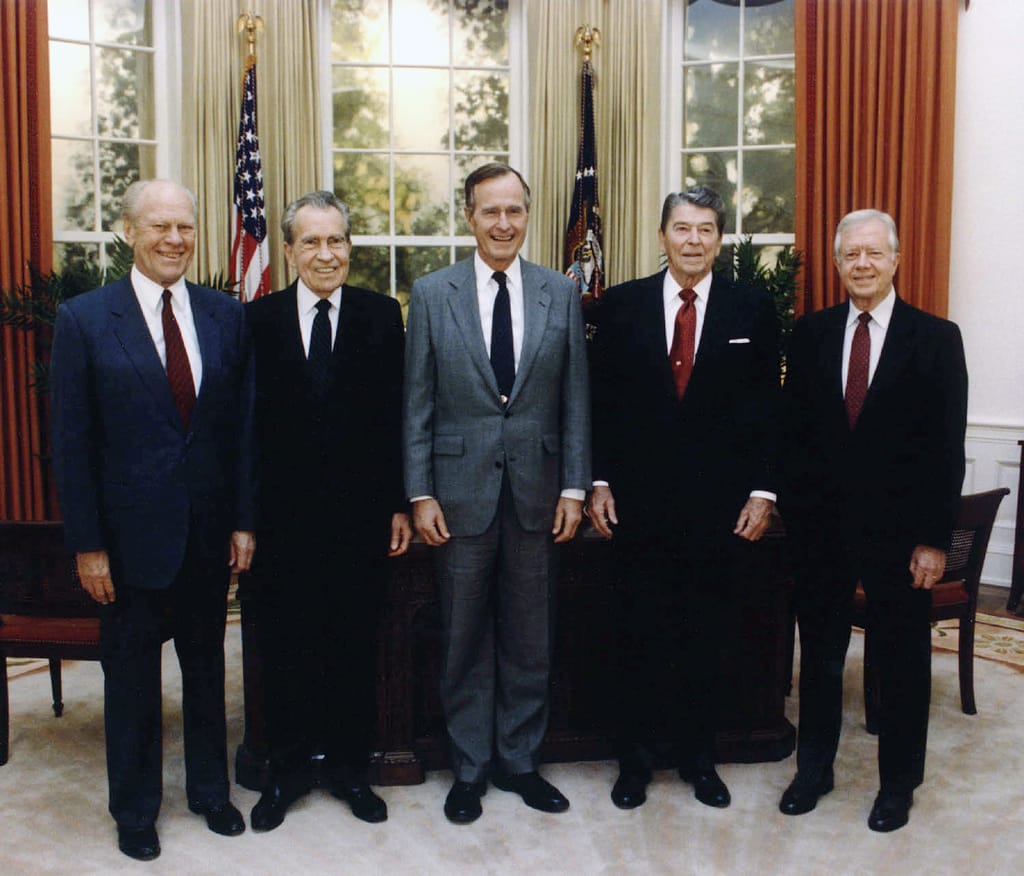
Watergate’s cultural impact is undeniable, even to this day. For the first time, Americans saw their president dressed down on national television and forced to resign; that shock is a valuable piece of American history and should not be forgotten. But with the power of hindsight (and more importantly declassified documents), it’s important not to conflate the degree of cultural shock with the degree of malfeasance.
Thank you for reading this short, highly opinionated thinkpiece! Whether you agree or disagree, hopefully it has you thinking from a new angle.
No AI was used at any point in the creation of this blog