The Appointees of Monroe and Grant

One of the most important things a president does is before they even take office: appoint a cabinet. In the early republic this was not a particularly daunting task, as the talent pool was small and based on geographic politics. If you’re a Democratic-Republican president you’ll find the most loyal Democratic-Republican to be your Secretary of the Navy - depending on the position actual qualifications may even come into consideration. In the post-Civil War environment preference is given to those who served in the Union army, especially if the Commander in Chief was the most decorated general of his time. These appointees have the ability to make or break entire administrations.
The Good - John Quincy Adams as Secretary of State
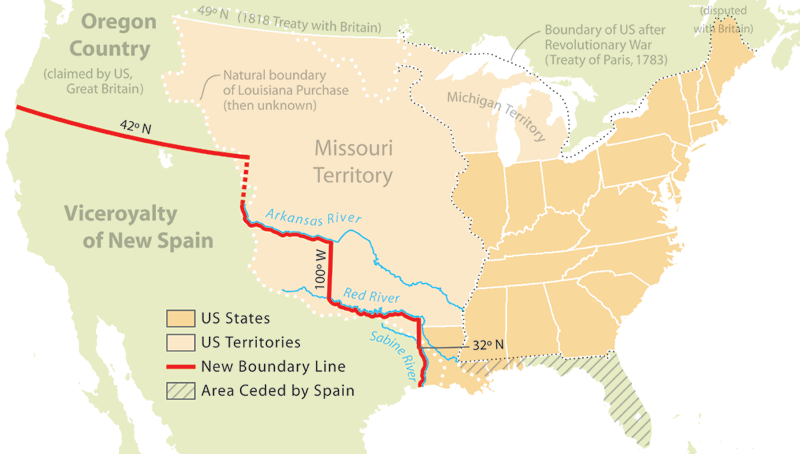
Entering the Presidential Mansion in 1815, James Monroe had his hands full in the realm of foreign affairs. For his Secretary of State he turned to the most qualified person he knew: John Quincy Adams. Son of the former president John Adams, JQA’s youth in the courts of England, France, Russia, and the Netherlands prepared him for the diplomatic dance partner of the day: Spain. The US primarily wanted two things from its southern European neighbor: an explicit definition for where the western boundary of the recently acquired Louisiana Territory was, and a suitable agreement to acquire Florida. This was all under the backdrop of Spanish colonies declaring independence en masse.
The way diplomacy was conducted in the early 1800s was that each recognized country would have a diplomatic minister (officially called a Minister Plenipotentiary) in your court, and you would have a diplomatic minister of your own in their court. Their minister would receive instructions from their diplomatic leader back home, and use those instructions to negotiate with your country’s diplomatic leader. In this case, as Secretary of State JQA was the diplomatic leader, and the diplomatic minister from Spain was Onís.
John Quincy Adams immediately went to work, negotiating with the Spanish foreign minister Luis de Onís. These negotiations dragged on and seemed exceedingly unproductive (and were frankly exhausting to read about), a fact compounded by the nature of diplomacy in those days which required months on end of waiting for instructions to arrive from the mother country. So they went back and forth for years, with JQA never letting up.
Onís, seemingly incompetent from the perspective of contemporary Americans, was actually quite shrewd in his stall tactics as keeping the US in negotiations with Spain served as a disincentive to supporting the South American revolutionaries. Monroe and Adams did support the South American independence movements, but could not move to formally recognize these new nations while trying to get land concessions from their colonial overlord.
However, by 1818 Spain was being exhausted by war with Napoleonic France and needed to be strategic with how it spent its resources. Florida was recognized as a liability, seeing as it was mostly populated by Seminole Indians, escaped slaves, and Andrew Jackson - the latter being the largest headache to both Spain and Monroe. Onís, now having an actual incentive to come to the bargaining table in good faith, sat down with JQA to hammer out a deal. The resulting agreement, known as the Adams-Onis Treaty, set the borders as below and, most notably, gave Florida to the US for the low, low, price of free (except paying for all legal claims Americans in Florida had against Spain - this was standard practice back then when acquiring territory). The treaty would be stalled by Spain for another 2 years, but was eventually enacted in 1821.
With the foolishness with Spain wrapped up, Monroe and JQA now had a free hand to recognize the South American republics. Since its founding, the US characterized itself as an isolationist country, meaning simply that it strove to stay out of the European wars that were all the rage in those days. However, during his 7th State of the Union address Monroe delivered a speech that explicitly stated the United States’s place in the world order. Summarized briefly, the Monroe Doctrine was a general policy of hemispheric isolation - the European powers of the Old World were to stay out of the New World, and any attempt by those powers to consolidate control or acquire territory in North or South America would be denounced. In light of the South American revolutions, this was a clear statement of support while also stating a change in American foreign policy. This policy, as you may have guessed by this point, was written by John Quincy Adams.
The Bad - Orville Babcock as Chief of Staff
Hardly any president is as notorious for his poor choice of appointees as President Ulysses S. Grant in 1869. While universally regarded as a personally honest man, he had the fatal flaws of being loyal to his friends and being a poor judge of character. In fact, being friends with Grant was lucrative indeed - several of his appointees were personal friends, war buddies, or even family. One of these appointees was his Chief of Staff [known at the time as Secretary to the President], Orville Elias Babcock.
Babcock was a military man, accompanying Grant from the Siege of Vicksburg in 1863 through the end of the war as part of the US Army Corps of Engineers. After the war Grant tasked him with reviewing the western army posts, and when Grant entered the White House he was appointed Chief of Staff. As it would turn out, Babcock’s true talent lay in engineering embarrassment for the president.
The number of scandals that plagued the Grant administration were innumerable (9), but one of the most famous (and most Babcock-ian) was the Whiskey Ring. Back in those days, a federal tax was levied on distilled spirits, and this was big business in Kentucky. Distillers in Kentucky had always used a sophisticated system of tax avoidance - simply paying the Federal inspector to not tax them when he arrived - but starting in 1873 they had gone professional. Under the pretext of raising Republican campaign funds, they flew under the radar as the juice wasn’t worth the squeeze to prosecute. At this point involved distillers, IRS agents, and Missouri Revenue Collector John McDonald (another Grant appointee) who enlisted the help of Babcock to keep the ring hidden.
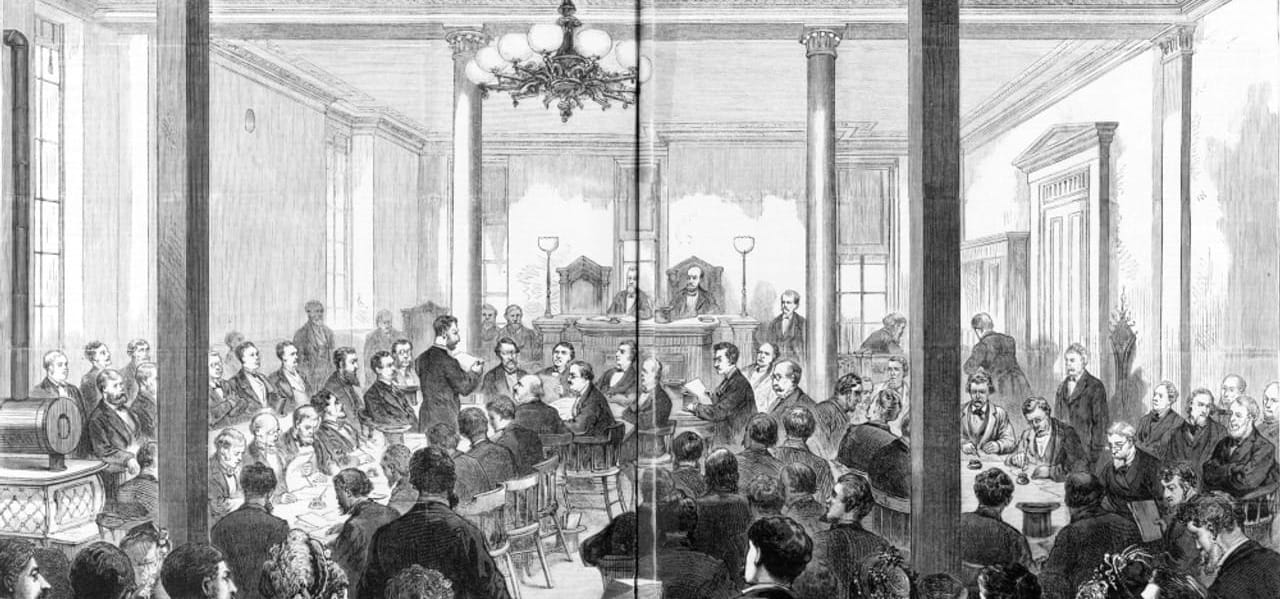
Babcock’s role specifically was to notify the distillers when the investigators were on their way. Using the penname “Sylph” he had tried to cover his tracks, but he was found out by Attorney General Edwards Pierrepont. Babcock had been trying to warn his compatriots of the impending investigation when Pierrepont seized him and his message. When Pierrepont warned Grant about his suspicion about Babcock, Grant famously replied “Let no guilty man escape.” When Babcock went to trial, he was defended by a top notch team and supported by character witnesses General William T. Sherman and President Grant himself. Despite the evidence presented by his Treasury Secretary and Attorney General, Grant remained loyal to his friend. The Whiskey Ring was broken, but Babcock was acquitted - so much for letting no guilty man escape.
Are these two cherrypicked examples enough to prove the importance of presidential appointments? Not really, but hopefully it gets you thinking. Neither Monroe nor Grant personally had a hand in the events described, but they’re called “The Monroe Doctrine” and the scandals of “the Grant administration” since they were responsible for the people they put in power.
I hope you enjoyed reading this first article as much as I did writing it!
No AI was used at any point in the creation of this blog